
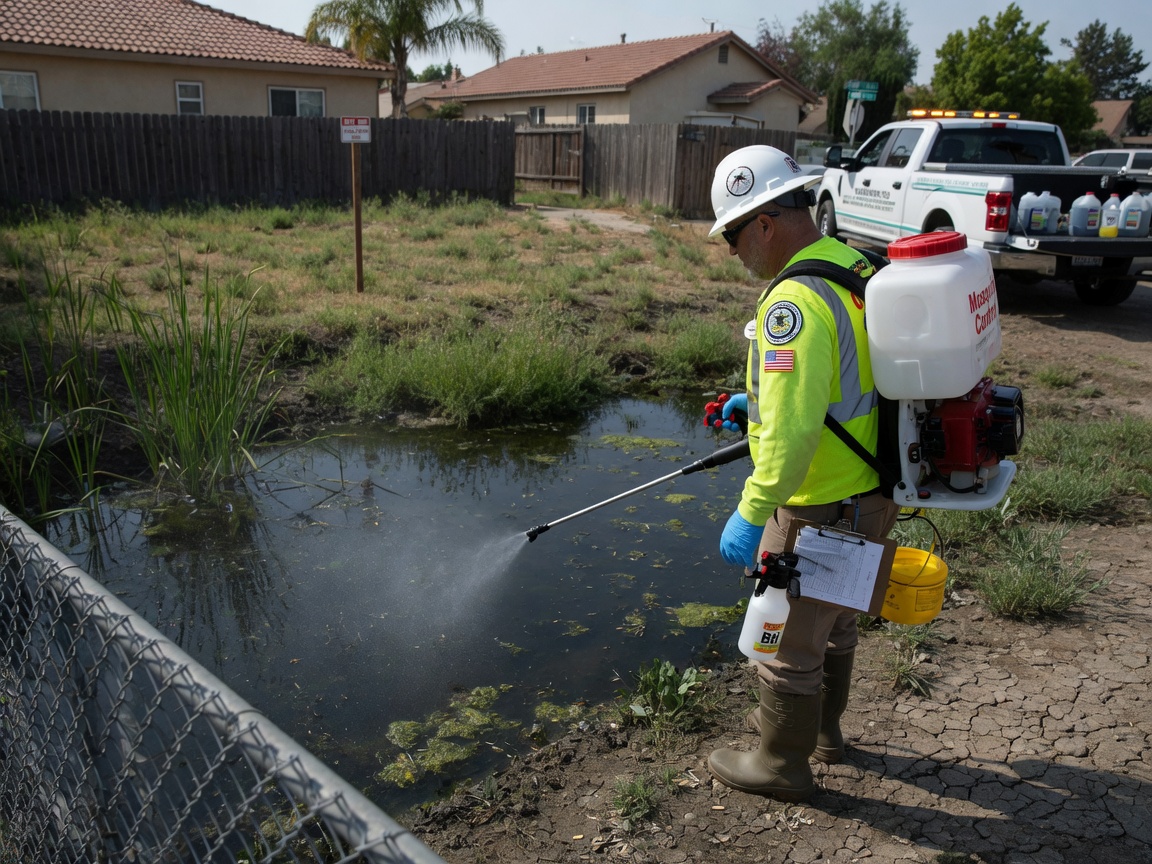
Bell Gardens' compact blocks of single-family homes and apartments clustered around Bell Gardens Park trap standing water in small yards, gutters and irrigation lines. The mild Mediterranean climate supports continuous mosquito activity, with extra pressure from pests drifting in along I-5 and CA-19 from surrounding Los Angeles County zones. Common failure modes include overlooked drainage in multi-unit buildings and park-adjacent puddles that generic sprays miss without on-site mapping of the city's tight layout.
Mosquito Management in Bell Gardens — What We Handle
- ✓Work centers on Bell Gardens Park edges and city hall grounds where irrigation creates persistent larvae pockets.
- ✓Dense shared-wall housing requires precise exclusion around neighboring properties instead of broad lot treatments.
- ✓Highway-adjacent blocks need extra monitoring for influx from outside the city limits.
Galt summers bring extended dry heat that concentrates mosquitoes around any persistent moisture from lawn irrigation, birdbaths, or low spots near Marian Park and the Historic Galt Depot. Properties in North Galt and Twin Cities often sit on older lots with aging drainage that holds water longer than newer builds in Elk Grove or Lodi. Effective management starts with locating these hidden sources rather than blanket spraying, because adult mosquitoes can travel from untreated yards into treated ones during the cool, wet winters when standing water persists longer.
Sacramento County does not require specific mosquito permits for residential work, yet treatments must avoid drift onto neighboring properties or into storm drains that feed local waterways. We use larvicides in water-holding containers and targeted adulticides on vegetation where mosquitoes rest during daylight hours. Homes built before the 1980s in Downtown Galt frequently have crawl spaces or planter boxes that collect water unseen from the street, creating breeding pockets that single fogging visits miss.
How It Works in Bell Gardens
- 1
Property Inspection
Walk the yard, check irrigation lines, and inspect shaded areas for water accumulation typical after Galt's winter rains.
- 2
Breeding Site Reduction
Remove or treat standing water and apply larvicide where containers cannot be emptied.
- 3
Targeted Adult Treatment
Apply barrier sprays to vegetation and structures where mosquitoes rest during the day.
- 4
Follow-Up Monitoring
Return within two weeks to check for new activity and adjust treatment as summer heat increases.
Mosquito Management Services We Offer in Bell Gardens
✓Larval Site Treatment
Apply EPA-registered larvicides to standing water in gutters, planters, and irrigation basins common on Galt lots to stop mosquitoes before they reach biting stage.
✓Adult Mosquito Barrier Spray
Treat vegetation and shaded resting areas around homes in North Galt and Twin Cities to reduce the number of adults entering living spaces during peak summer evenings.
✓Standing Water Assessment
Walk the full property including outbuildings and low areas near Galt Community Park to identify and eliminate breeding sites that persist through dry summers.
✓Seasonal Mosquito Prevention Plan
Schedule recurring visits timed to Galt's hot dry summers and cool wet winters so new hatches are addressed before they become noticeable.
✓Yard Fogging Service
Deliver quick knockdown applications in the evening when mosquitoes are most active around outdoor living areas in Downtown Galt neighborhoods.
Serving All of Bell Gardens
We regularly handle mosquito management jobs near:
- 📍Bell Gardens City Hall
- 📍Bell Gardens Park
Mosquito Management Pricing in Bell Gardens
Most Galt mosquito jobs fall between initial inspection and two treatments; exact cost depends on property size and number of water sources.
Want the full picture of this service? See our Mosquito Management page, or everything we do in Bell Gardens, CA.