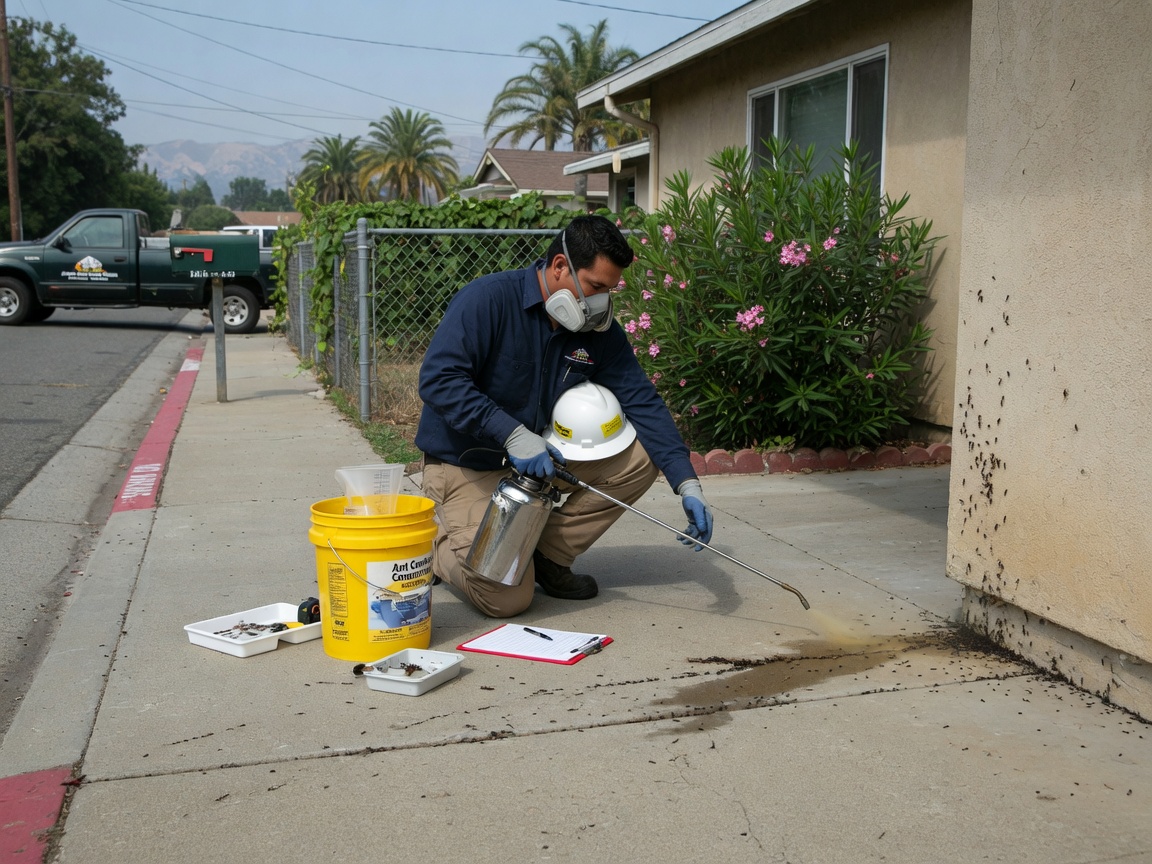
Galt's hot dry summers drive ants indoors seeking moisture around foundations in North Galt and Twin Cities neighborhoods where older single-family homes sit on compacted soil. Perimeter treatments focus on entry points at slab edges and utility penetrations rather than broadcast sprays that wash away quickly in the first cool wet winter rains. Technicians map trails back to satellite nests often hidden under concrete near Marian Park or along irrigation lines feeding Historic Galt Depot landscaping.
Argentine ants common in Sacramento County follow moisture gradients into kitchens after winter storms, bypassing standard baits when colonies split during prolonged dry spells. Integrated programs combine non-repellent residuals along baseboards with targeted gel placements inside wall voids, avoiding disruption to the many mature trees that shade Downtown Galt yards. Follow-up visits adjust for the way cool nights extend foraging activity into early morning hours.
Ant Control Near You — Choose Your City
Every city below has its own local Ant Control page with coverage details.
Other areas
Los Angeles
Orange County
San Diego County
San Bernardino County
Contra Costa
San Bernardino
Riverside County
Fresno County
Kern County
Santa Cruz County
Homeowners in Elk Grove and Lodi borders often see carry-over issues from adjacent agricultural edges where ants exploit cracked stucco on 1970s-era builds. Treatments account for soil movement around older plumbing that creates hidden galleries, requiring dust applications rather than liquids in those voids. Service windows stay within Mon–Fri 7am–5pm to align with peak foraging before daytime heat returns.
Technician insight
In Galt the thing that catches most people out with ant control is how winter rains push Argentine ants under slab edges on 1960s homes in North Galt, where standard sprays fail once the colony splits and moves to drier voids near the Historic Galt Depot.
North Galt kitchen invasion after first winter rains
Homeowner noticed steady trails along baseboards near the sink. Inspection found a satellite nest under the slab edge fed by irrigation runoff. Non-repellent perimeter material and interior gel placements eliminated the colony within ten days without excavation.
Ant Control Services We Offer
✓Argentine Ant Colony Treatment
Non-repellent perimeter applications that reach satellite nests common along Galt irrigation lines and foundation cracks during dry summer months.
✓Carpenter Ant Wood Inspection
Targeted checks of moisture-damaged framing in North Galt homes where cool wet winters create entry points for carpenter ants near tree lines.
✓Indoor Ant Nest Location
Tracing trails inside walls and under slabs in Twin Cities properties to place gel baits that eliminate hidden colonies without full-home disruption.
✓Seasonal Perimeter Barrier
Spring and fall barrier treatments timed for Galt's weather shifts to block re-entry from yards bordering Galt Community Park and Marian Park.
✓Commercial Ant Control
Low-impact programs for Downtown Galt businesses that maintain service during Mon–Fri 7am–5pm hours without interrupting customer traffic.
Ant Control Cost in California
| Service | Typical Range | What Affects It |
|---|---|---|
| Initial residential treatment | $175–$350 | Varies with square footage and whether multiple colonies are active around older slabs. |
| Commercial service call | $250–$450 | Depends on building size and need for after-hours access in Downtown Galt. |
| Follow-up visit | $75–$125 | Included once within 30 days; additional visits priced by remaining activity. |
| Seasonal prevention program | $400–$650 | Two visits timed for spring and fall weather changes on larger lots. |
Ranges are typical for California and confirmed with an exact written quote before any work starts.
How it works
- 1
Property Inspection
Walk the exterior and interior to map trails, locate moisture sources, and note housing age factors around foundations in North Galt.
- 2
Targeted Application
Place non-repellent materials along entry points and satellite nest locations identified during the walk-through.
- 3
Bait Placement
Install gel and station baits inside and outside to allow colony transfer before seasonal rains alter foraging patterns.
- 4
Follow-Up Monitoring
Return visit to adjust placements after initial knockdown and confirm activity has stopped near treated structures.
Pricing
Upfront quotes after inspection, based on property size and number of colonies found.