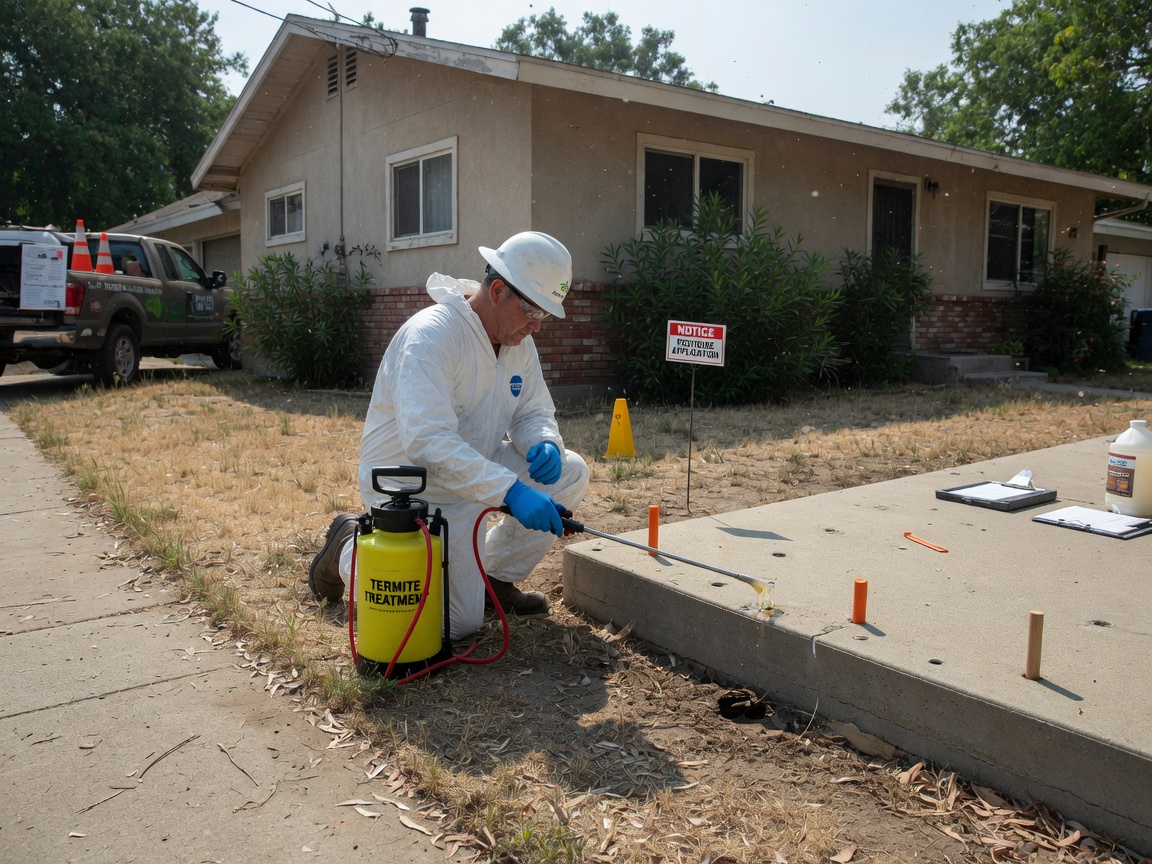
Galt's mix of pre-1970 homes in Downtown Galt and North Galt often features raised foundations and older sill plates that subterranean termites exploit once winter rains raise soil moisture. Hot, dry summers then push drywood colonies deeper into attics and eaves, making whole-structure inspection essential before any treatment begins. Technicians check for mud tubes along stem walls, probe joists with an awl, and use moisture meters around the Historic Galt Depot area where irrigation runoff collects against foundations.
Liquid termiticides applied to soil or foam injected into wall voids remain the primary tools, but bait stations are preferred when properties sit near Marian Park's irrigated turf that keeps soil damp year-round. Edge cases include homes backing onto Twin Cities rail lines where soil disturbance can breach prior barriers, requiring re-trenching. Homeowners should avoid disturbing soil or mulch within three feet of the foundation for at least 30 days after application to maintain the treated zone.
Termite Treatment Near You — Choose Your City
Every city below has its own local Termite Treatment page with coverage details.
Other areas
Los Angeles
Orange County
San Diego County
San Bernardino County
Contra Costa
San Bernardino
Riverside County
Fresno County
Kern County
Santa Cruz County
Sacramento County does not require termite treatment before sale, yet lenders often request a Section 1 clearance; technicians document active infestation versus conditions conducive so real-estate transactions in Elk Grove or Lodi corridors are not delayed. Re-treatment warranties cover only the treated structure and exclude additions or detached garages unless inspected separately.
Technician insight
In Galt, the thing that catches most people out with Termite Treatment is winter rain pooling against the north side of older North Galt foundations where downspouts empty directly onto the soil; that constant moisture keeps subterranean colonies active even through the hot summer months when homeowners think the problem has gone away.
Downtown Galt Bungalow with Active Subterranean Tubes
A 1940s bungalow near the Historic Galt Depot showed mud tubes climbing the stem wall after heavy February rains. Inspection confirmed live termites in the subfloor joists. Technicians trenched the perimeter, applied termiticide, and installed four bait stations. Follow-up at 60 days showed no new activity and the homeowners sold the property without delay.
Termite Treatment Services We Offer
✓Subterranean Termite Soil Treatment
Trench-and-treat or rodding around foundations to create a chemical barrier against colonies drawn by Galt's winter moisture.
✓Drywood Termite Spot Treatment
Localized injection of termiticide or dust into active galleries inside attics and window frames common in North Galt homes.
✓Termite Baiting System Installation
Above-ground and in-ground stations monitored quarterly to intercept colonies moving between irrigated yards and older sill plates.
✓Whole Structure Fumigation
Tenting for heavy drywood infestations when spot treatments cannot reach all colonies in multi-story Twin Cities properties.
✓Post-Construction Wood Treatment
Borate or borate-foam application to exposed joists and subfloors during renovations in Downtown Galt historic homes.
Termite Treatment Cost in California
| Service | Typical Range | What Affects It |
|---|---|---|
| Initial Inspection | $75–$150 | Includes crawlspace and attic access; higher for locked or cluttered spaces |
| Subterranean Barrier Treatment | $800–$2,200 | Perimeter footage and soil type move the price |
| Drywood Spot Treatment | $350–$900 | Number of active sites and attic accessibility |
| Bait Station Installation | $600–$1,400 | Initial set plus first year of quarterly monitoring |
| Fumigation | $1,800–$4,500 | House size, tenting difficulty and drywood extent |
Ranges are typical for California and confirmed with an exact written quote before any work starts.
How it works
- 1
Detailed Inspection
Technician examines foundation, crawlspace, attic and exterior soil line for tubes, frass and moisture issues specific to Galt's older stock.
- 2
Treatment Plan
Custom recommendation of liquid barrier, bait stations or fumigation based on termite species and property layout near local parks or rail lines.
- 3
Application
Targeted application using trench, drill or tent methods while protecting landscaping and complying with county notification rules.
- 4
Follow-Up Monitoring
Scheduled inspections at 30 days and quarterly thereafter to verify colony elimination and adjust stations if winter rains increase activity.
Pricing
Most Galt termite jobs fall between inspection fees and full-structure treatments; final cost depends on square footage, access and whether fumigation is required.