
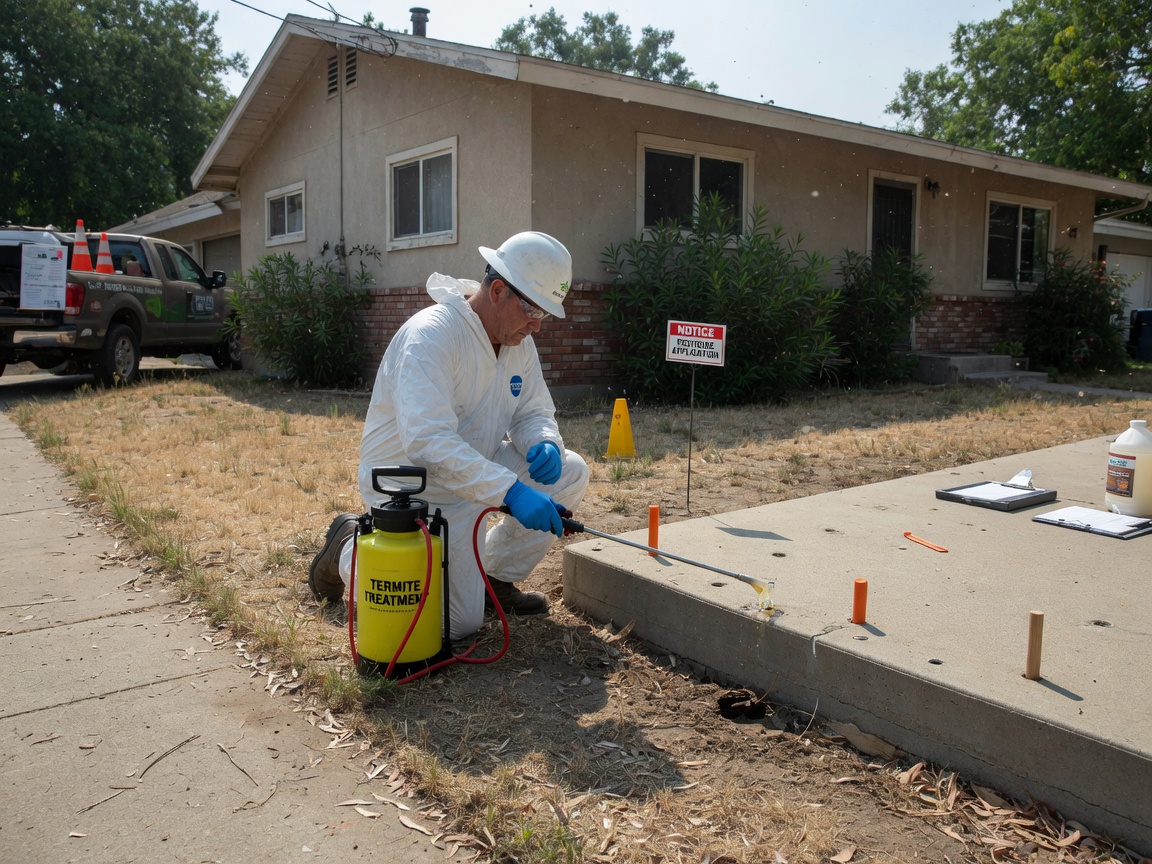
Long Beach's older wooden housing stock in neighborhoods around the Port of Long Beach faces steady pressure from both subterranean and drywood termites that remain active year-round in the mild Mediterranean climate. Crews work around tight urban lots and shared walls along I-710 and CA-1, where waterfront moisture speeds decay in foundations and attics near the Queen Mary and Aquarium of the Pacific. Missed activity in multi-family structures bordering Long Beach City Hall often leads to spread through connected framing before treatment begins.
Termite Treatment in Long Beach — What We Handle
- ✓Dense waterfront lots restrict equipment access compared with inland suburbs
- ✓Ocean humidity drives faster wood decay along CA-1 corridors
- ✓Historic and multi-unit buildings near the port require targeted inspections to avoid cross-unit movement
Galt sits in Sacramento County where cool wet winters bring the moisture that fuels termite colonies, especially in older wood-framed homes around the Historic Galt Depot and Marian Park. Hot dry summers that follow often hide active mud tubes until damage appears in crawl spaces or under decks. Treatment here usually combines liquid barriers with bait stations placed along foundation perimeters because the clay-heavy soil holds water longer than the sandy ground found closer to Lodi or Stockton.
Drywood termites show up more often in single-story homes built before the 1980s in Downtown Galt and Twin Cities neighborhoods. These colonies stay inside structural lumber and require localized wood treatments or fumigation when they reach attic framing. Subterranean species travel from soil to wood through expansion joints and plumbing penetrations, so crews drill and inject along slab edges and install monitoring stations in landscaped beds near Galt Community Park.
How It Works in Long Beach
- 1
Property Inspection
Technician walks the full exterior and interior, checking crawl spaces, attics, and soil along foundations in Galt neighborhoods.
- 2
Species Identification
Samples of frass or tubes determine whether drywood or subterranean termites are active so the correct method is chosen.
- 3
Targeted Treatment
Bait stations, liquid barriers, or wood injections are placed according to findings and local soil conditions.
- 4
Monitoring Setup
Stations and follow-up visits are scheduled to confirm colony elimination over the next several months.
Termite Treatment Services We Offer in Long Beach
✓Drywood Termite Treatment
Localized wood injection and spot fumigation for colonies inside rafters and trim common in pre-1980 homes in Downtown Galt.
✓Subterranean Termite Baiting
Installation of in-ground stations around foundations in North Galt to intercept foraging tubes before they reach living spaces.
✓Termite Damage Assessment
Detailed crawl-space and attic inspection that maps active galleries and recommends structural repairs before treatment begins.
✓Preventive Soil Barrier Application
Trench-and-treat or drilled slab treatment using non-repellent termiticides suited to Galt's seasonal moisture cycles.
✓Post-Construction Wood Treatment
Borate or non-repellent foam applied to exposed framing during renovations in Twin Cities area homes.
Serving All of Long Beach
We regularly handle termite treatment jobs near:
- 📍Queen Mary
- 📍Aquarium of the Pacific
- 📍Port of Long Beach
- 📍Long Beach City Hall
Termite Treatment Pricing in Long Beach
Pricing varies by property size, infestation type, and whether bait systems or full barriers are needed.
Want the full picture of this service? See our Termite Treatment page, or everything we do in Long Beach, CA.