
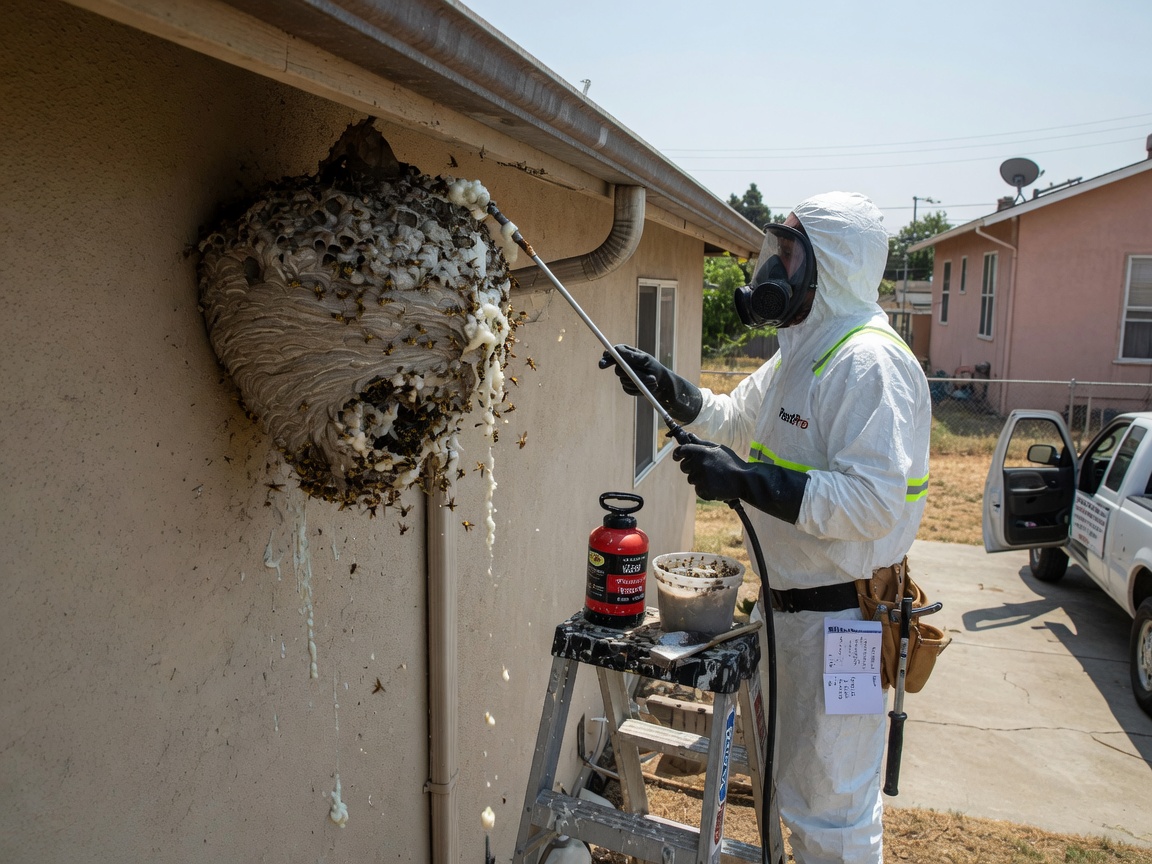
Long Beach's mix of older bungalows and multi-unit buildings near the Port of Long Beach creates frequent wasp nesting sites in eaves, soffits, and dock-adjacent structures along I-710 and CA-1 corridors. The mild Mediterranean climate moderated by the ocean keeps yellowjackets and paper wasps active well into late fall, especially around the Queen Mary waterfront and dense urban blocks near Long Beach City Hall. Technicians must navigate tight alley access and shared walls in these neighborhoods where ground nests often appear in irrigated strips beside the I-405. Common failure modes include incomplete nest removal on upper-story balconies of apartment complexes, allowing re-infestation within days, and treatments that overlook harbor-adjacent industrial edges where wasps forage on port vegetation.
Wasp Removal in Long Beach — What We Handle
- ✓Ocean breezes push ground-nesting species into irrigated medians along CA-1 rather than typical inland sites.
- ✓Dense housing stock near the Aquarium of the Pacific requires low-odor methods to prevent drift into neighboring units.
- ✓Port-area traffic on I-710 and I-405 lengthens response windows compared to inland California routes.
Galt's hot dry summers drive yellowjackets and paper wasps to build nests in eaves, attics, and ground holes around older homes in Downtown Galt and North Galt. These colonies expand quickly when temperatures stay high, and the cool wet winters that follow can push surviving queens into structures near the Historic Galt Depot or Marian Park. Technicians locate entry points by watching flight paths at dawn and dusk, then apply targeted dust or foam that reaches the nest without flooding the area.
Sacramento County soil stays loose in many Twin Cities lots, making ground nests common after irrigation or winter rains. Homeowners often mistake these for rodent holes until stings occur. Removal requires protective suits, extension tools, and sometimes excavation to destroy the comb. Nearby cities like Elk Grove and Lodi share similar patterns, but Galt's mix of older single-story homes and open lots creates more accessible yet hidden sites that demand careful inspection before treatment.
How It Works in Long Beach
- 1
Site Inspection
Observe wasp flight patterns at dawn and dusk around the property in Galt to pinpoint nest location and species.
- 2
Targeted Treatment
Apply dust or foam directly into the nest using extension tools to reach colonies in eaves, ground holes, or attics.
- 3
Nest Removal
Extract or destroy the comb once activity stops, including excavation for ground nests in loose local soil.
- 4
Entry Sealing and Follow-Up
Close gaps and return within two weeks to confirm no new activity near parks or open lots.
Wasp Removal Services We Offer in Long Beach
✓Yellowjacket Nest Removal
Locates and eliminates ground or aerial yellowjacket colonies common in Galt's dry summer months using dust applications that reach the queen.
✓Paper Wasp Removal
Treats open-comb paper wasp nests under eaves and porch ceilings found on older homes in Downtown Galt and North Galt.
✓Ground Nest Extraction
Handles buried yellowjacket nests in loose Sacramento County soil after winter rains or irrigation, including safe excavation when needed.
✓Attic Wasp Colony Treatment
Accesses and removes established colonies inside attics of single-story homes near the Historic Galt Depot where entry points are hard to reach.
✓Commercial Wasp Control
Manages nests around business exteriors and loading areas in Twin Cities and along routes to Lodi and Stockton.
Serving All of Long Beach
We regularly handle wasp removal jobs near:
- 📍Queen Mary
- 📍Aquarium of the Pacific
- 📍Port of Long Beach
- 📍Long Beach City Hall
Wasp Removal Pricing in Long Beach
Cost depends on nest height, location, and whether excavation is required.
Want the full picture of this service? See our Wasp Removal page, or everything we do in Long Beach, CA.