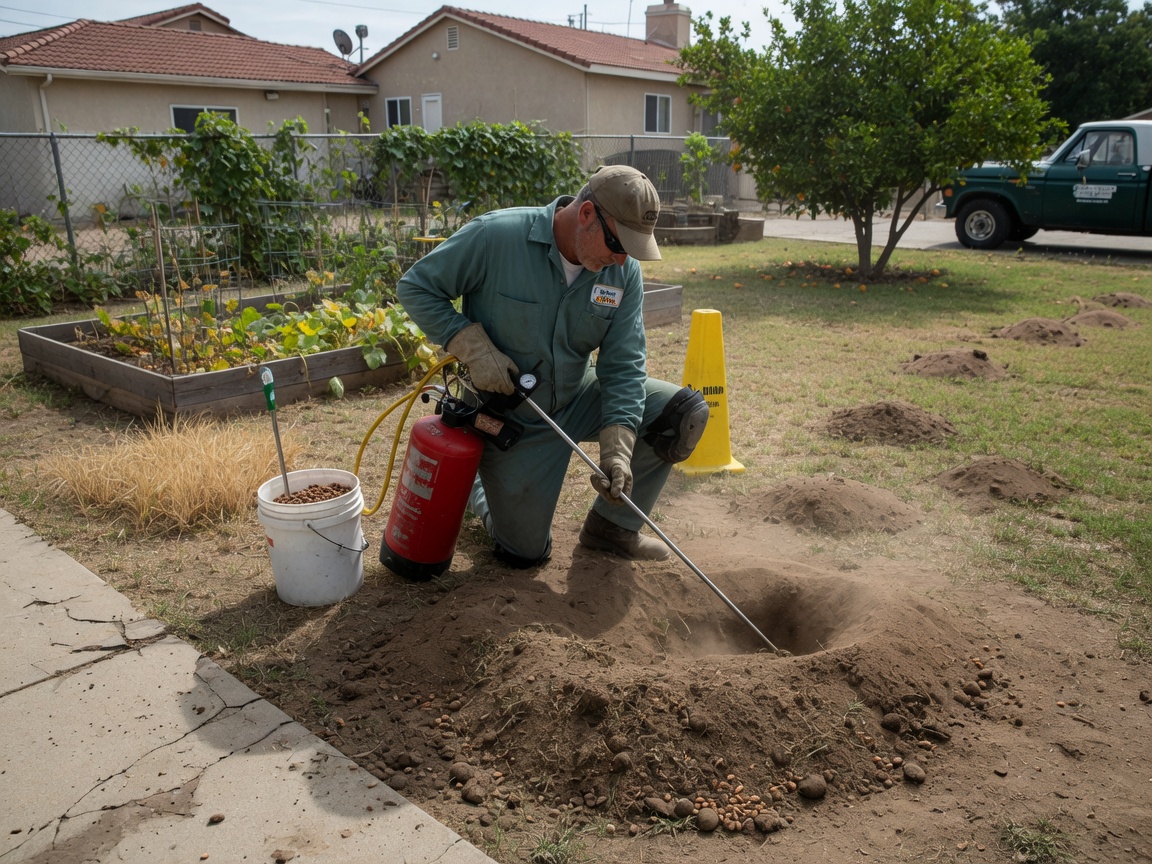
In San Diego's mild Mediterranean climate gophers stay active through every month, pushing mounds through the sandy soils typical of yards around Balboa Park and La Jolla Cove. Suburban homes near I-5, I-8 and CA-163 frequently see burrow systems that cross property lines into neighboring lots or open spaces tied to defense and biotech campuses. Standard trap placements often fail when crews overlook the shallow, extensive tunnels that form under irrigated lawns and reach the edges of the San Diego Zoo grounds.
Gopher Control in San Diego — What We Handle
- ✓Coastal humidity demands moisture-resistant bait stations that hold up better than those used inland.
- ✓Work near Balboa Park and protected coastal zones restricts certain rodenticides and requires extra containment steps.
- ✓Service routes along I-5 and CA-163 must avoid peak commute windows to reach hillside neighborhoods efficiently.
Gopher Control Services We Offer in San Diego
✓Gopher Trapping
Placement of multiple traps along active main tunnels to remove breeding adults quickly on residential lots in North Galt and Twin Cities.
✓Burrow Baiting Services
Strategic placement of bait into active runs at proper depth, followed by monitoring to confirm consumption before re-treatment.
✓Gopher Damage Assessment
Full mapping of tunnel systems and root damage around lawns and gardens near Galt Community Park or the Historic Galt Depot.
✓Perimeter Barrier Installation
Underground stainless mesh barriers installed along property lines to stop gophers moving between neighboring yards in older Downtown Galt blocks.
✓Follow-Up Monitoring Visits
Scheduled return inspections seven to ten days after initial service to catch any remaining laterals before they expand again.
Gophers thrive in Galt’s mix of older residential lots and open spaces around Marian Park and the Historic Galt Depot. Cool wet winters soften clay-heavy soils common in Sacramento County, letting pocket gophers push fresh mounds into yards faster than homeowners notice. Hot dry summers then push the animals toward irrigation lines in North Galt and Twin Cities neighborhoods, where they damage roots and create tripping hazards. Experienced crews map active tunnels by probing rather than guessing, because abandoned burrows from previous seasons often collapse under foot traffic after the first rains.
Standard rodenticides lose effectiveness once gophers hit harder clay layers found near the old railroad corridor. Trapping remains the most reliable method on smaller lots, while larger acreage bordering Lodi and Stockton may require a combination of bait stations placed at main run depths of eight to twelve inches. Crews avoid surface scattering that risks non-target wildlife common around Galt Community Park. Every job includes a follow-up visit seven to ten days later because one missed lateral tunnel can restart the entire colony within weeks.
How It Works in San Diego
- 1
Site Inspection
Probe soil and flag active tunnels across the property, noting irrigation lines and any barriers already in place.
- 2
Treatment Plan
Select trapping, baiting, or barrier options based on soil conditions and property size in the specific Galt neighborhood.
- 3
Implementation
Install traps or bait stations at correct depths and angles, then document every placement for the homeowner.
- 4
Follow-Up Check
Return within ten days to reset or remove equipment and confirm no new mound activity.
Serving All of San Diego
We regularly handle gopher control jobs near:
- 📍Balboa Park
- 📍San Diego Zoo
- 📍USS Midway Museum
- 📍La Jolla Cove
Gopher Control Pricing in San Diego
Upfront quotes given after on-site inspection; final cost depends on lot size, tunnel extent, and whether barriers are needed.
Want the full picture of this service? See our Gopher Control page, or everything we do in San Diego, CA.