
2026-10-28 · Sam Torres
Seasonal Ant Activity Patterns In The Delta Region
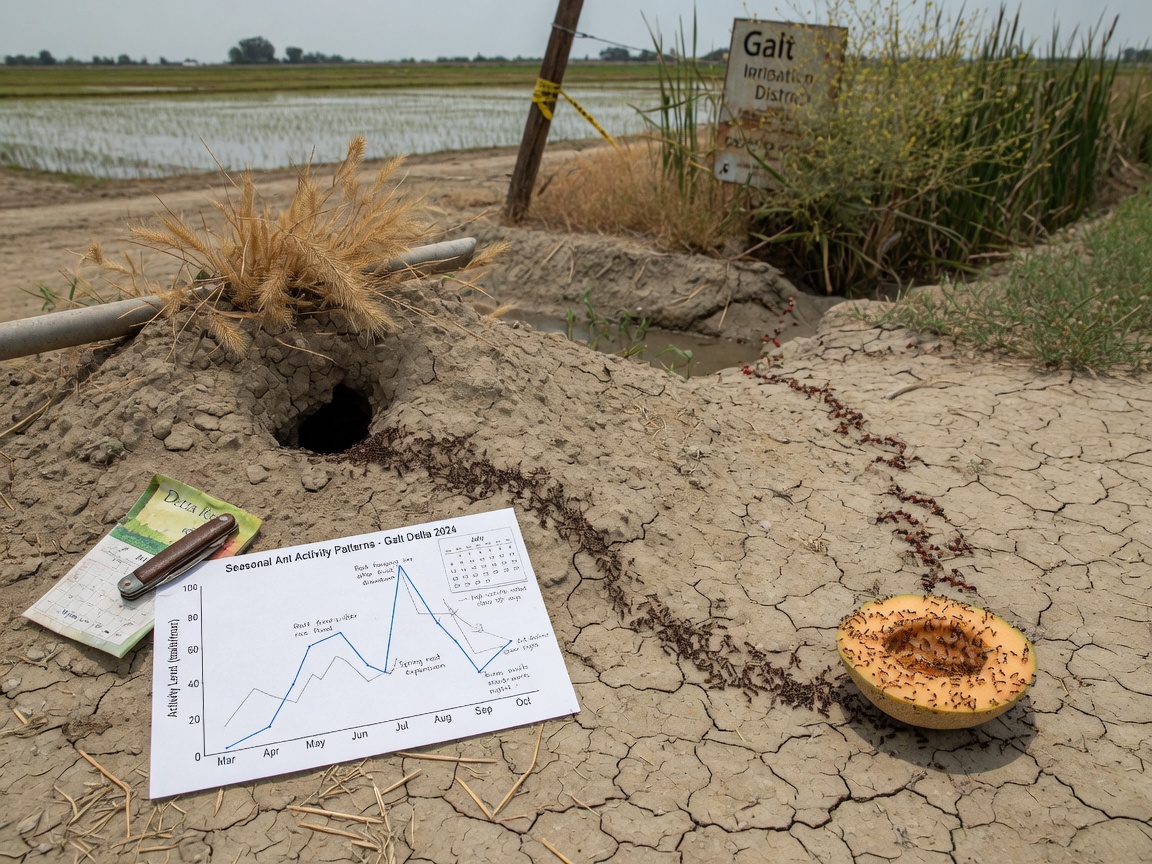
In the Delta Region around Galt, ant activity peaks from April through October as colonies expand foraging trails 30–50 feet outward during hot dry summers before retreating indoors when cool wet winters arrive.
Spring Colony Expansion Near Galt Community Park
Spring warming triggers initial scouting in areas like Marian Park and around the Historic Galt Depot where older housing stock with crawl spaces provides easy access. Argentine ants and pavement ants establish new satellite nests within 8–12 feet of irrigation lines that stay moist longer than surrounding dry soil. Homeowners in North Galt notice increased trail activity along foundation cracks once daytime temperatures consistently reach the mid-70s. These early movements set the stage for larger summer populations because each queen can produce 1,000–2,000 workers monthly when food sources remain abundant. Checking for moisture around downspouts and hose bibs reduces the number of viable nesting sites before colonies grow.
Summer Foraging in Hot Dry Conditions
Hot dry summers drive ants to travel farther for water, creating visible trails across driveways and sidewalks in Twin Cities and Downtown Galt. Workers from a single colony can cover 40–60 linear feet daily while seeking sugars and proteins near outdoor dining areas or pet food bowls. The lack of natural rainfall forces colonies to exploit any consistent moisture source, including condensation from air conditioning units common on ranch-style homes built in the 1970s and 1980s. In nearby Elk Grove and Lodi, similar patterns appear along orchard edges where irrigation ditches supply both water and aphids that ants protect for honeydew. Reducing standing water and sealing 1/8-inch gaps around utility penetrations limits indoor incursions during peak foraging months.
Fall and Winter Shifts With Cool Wet Weather
Cool wet winters push colonies deeper into wall voids and under slabs as temperatures drop below 55 degrees and rainfall increases soil moisture. In Galt homes with pier-and-beam foundations, ants follow plumbing lines indoors seeking warmth and food once outdoor foraging becomes limited. Activity slows but does not stop; workers continue moving between satellite nests through underground tunnels that remain active even during January rains. Properties near Stockton and the Delta waterways see higher indoor sightings because saturated soil forces ants upward into structures. Monitoring for small clusters near baseboards during the first cool spells helps identify entry points before full winter nesting occurs.
Local Terrain and Housing Factors Affecting Control
Galt’s mix of older single-story homes and newer subdivisions on clay-heavy soils creates consistent moisture pockets that sustain colonies year-round. Foundations in North Galt often sit 6–12 inches above grade yet still allow ants to follow expansion joints when irrigation overspray keeps soil wet. Linking seasonal patterns to targeted exclusion around windows and doors proves more effective than broad treatments alone. Readers seeking species-specific identification steps can review the Ant Control page for detailed inspection guidance. Properties bordering agricultural land between Lodi and Elk Grove experience additional pressure from field-edge colonies that migrate toward residential irrigation during dry spells.