2026-09-03 · Chris Morales
Common Pests Found In Galt Agricultural Areas
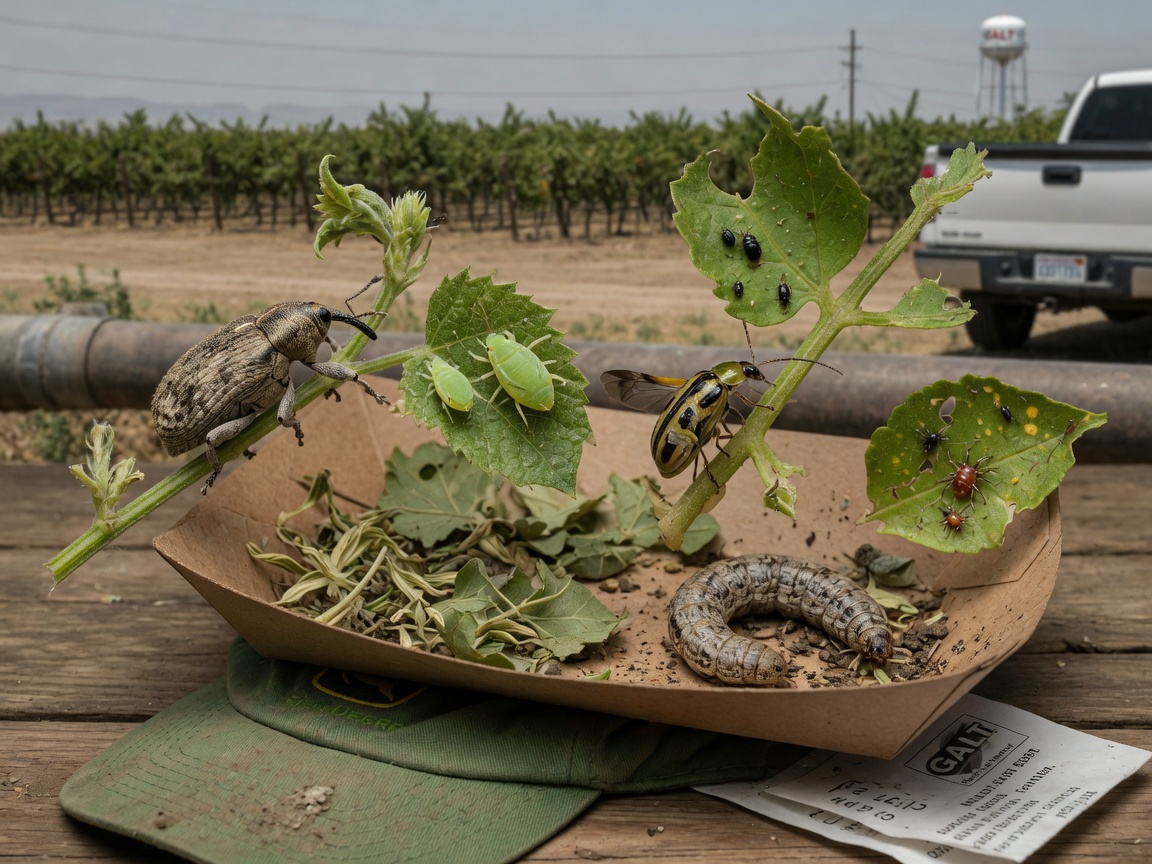
Galt agricultural areas see four primary pests year-round: pocket gophers, roof rats and deer mice, pavement and harvester ants, plus several spider species that thrive along ditch banks. These populations rise and fall with the shift from hot dry summers that concentrate pests near water to cool wet winters that drive them into structures and stored feed.
Pocket Gophers and Burrowing Damage
Gophers remain active in the loamy soils around Twin Cities and North Galt where alfalfa, vineyards and row crops dominate. Their tunnels sever irrigation lines and undermine equipment paths, especially after winter rains loosen the ground. Fresh crescent-shaped mounds appear most often in spring and fall when soil moisture supports deeper digging. Property owners notice wilting plants along straight lines where roots have been clipped underground. Regular monitoring of field edges near Marian Park and the Historic Galt Depot helps catch new colonies before they expand into larger blocks of farmland.
Rodents in Barns and Crop Storage
Roof rats and deer mice move between orchards, grain bins and homes in Downtown Galt once summer heat dries out natural cover. These rodents chew wiring in pump houses and contaminate feed with droppings, creating both fire and health risks. Cool wet winters push them indoors toward any available warmth and food source. Trapping along fence lines and sealing gaps around Historic Galt Depot buildings reduces pressure without broad chemical use. For details on targeted approaches, see our rodent control page.
Ant Colonies and Irrigation Ditches
Pavement ants and harvester ants build large colonies along the edges of irrigation ditches that crisscross fields between Galt and Lodi. Hot dry summers force workers to forage farther for moisture and protein, leading them into homes and equipment sheds. Cool wet winters flood shallow nests, prompting ants to seek higher ground near structures. Seasonal patterns in the Delta region show peak activity from April through October. Readers can learn more in our post on seasonal ant activity patterns in the Delta region.
Spiders Near Water and Crop Residue
Several spider species, including black widows and funnel weavers, build webs along ditch banks and under harvest equipment left in fields. The combination of standing water from irrigation and abundant insect prey during hot dry summers supports steady populations. Cool wet winters concentrate spiders in protected corners of barns and pump houses. Reducing clutter and sealing entry points around Marian Park properties limits indoor encounters. Additional guidance appears in our article on preventing spider issues near irrigation ditches.
Practical Steps for Galt Growers
Walk field perimeters weekly during spring and fall to spot new gopher mounds or ant trails. Store grain in sealed containers and trim vegetation within 18 inches of building foundations to remove rodent cover. Check drip lines and pump housings monthly for chew marks or web clusters. These habits, combined with targeted service calls available Monday through Friday from 7am to 5pm, keep agricultural operations running smoothly across Sacramento County and nearby Elk Grove and Stockton farmlands.