2026-09-03 · Chris Morales
Preventing Spider Issues Near Irrigation Ditches
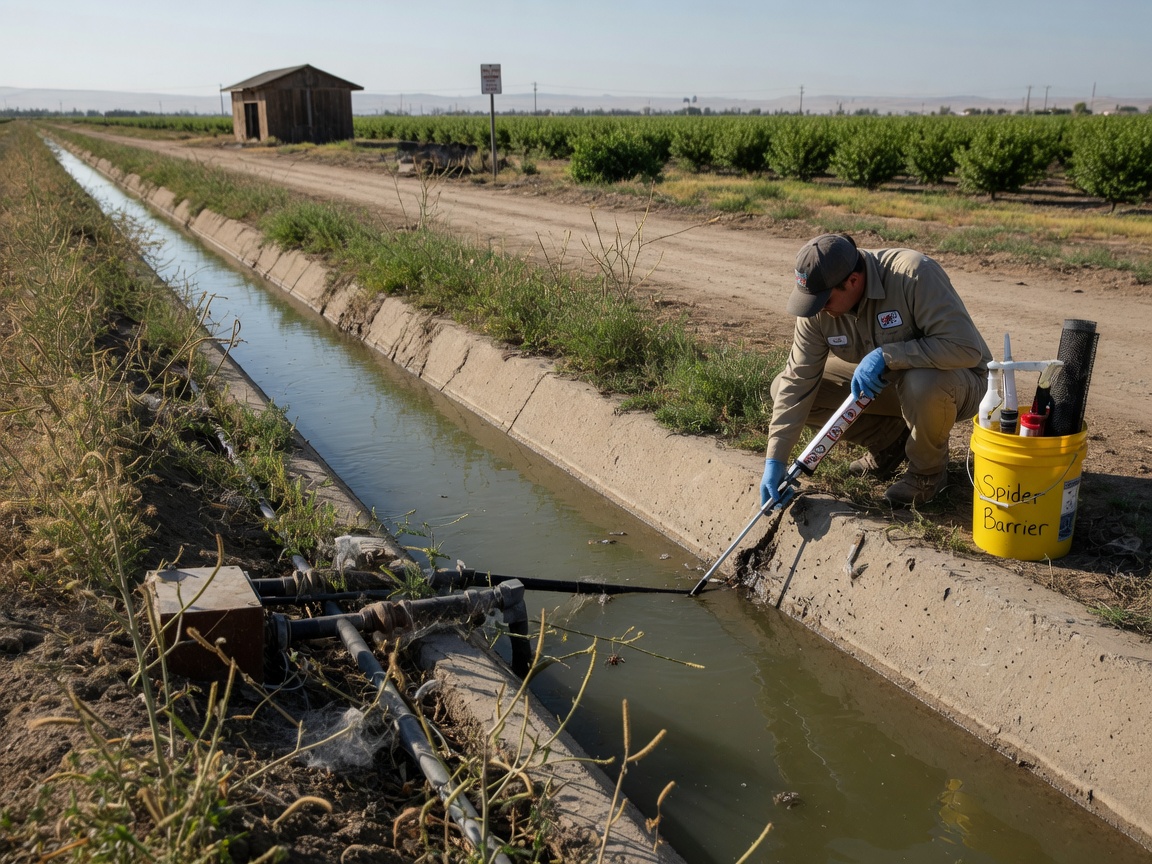
Preventing spider issues near irrigation ditches in Galt starts with monthly perimeter checks from March through November combined with vegetation trimming within 3 feet of ditch banks. These steps address the way cool wet winters drive spiders toward drier structures while hot dry summers concentrate prey near remaining moisture.
Local Ditch Conditions That Attract Spiders
Galt sits in Sacramento County with extensive agricultural irrigation networks feeding fields around Twin Cities and North Galt. These ditches hold standing water much of the year and support dense weeds plus insect populations that sustain black widows and brown recluse spiders. Older homes near Marian Park and the Historic Galt Depot often sit within 200 yards of these channels, allowing spiders to follow utility lines or fence rows straight to foundations. Hot dry summers bake the surrounding soil, pushing spiders to seek shade under decks or in crawl spaces, while cool wet winters increase moisture that draws them indoors. Residents in Downtown Galt see higher activity where ditches run behind properties built before 1980 with unsealed sill plates.
Seasonal Timing for Effective Prevention
Focus efforts in late winter before rains arrive and again in early fall after harvest. Trim grasses and remove debris piles within 10 feet of ditch edges during February when vegetation is low. In September, clear leaf litter that accumulates along fence lines connecting residential lots to irrigation channels. These windows align with spider mating and dispersal periods in the region. Properties bordering ditches near Galt Community Park require extra attention because seasonal flooding deposits organic matter that harbors egg sacs. Consistent removal of this material cuts spider food sources without relying on chemicals.
Habitat Modifications That Work on the Ground
Install 6-inch gravel strips along ditch-adjacent fences to eliminate harborage. Seal gaps around pipe entries and foundation vents with copper mesh rather than foam, which spiders can chew through. Store firewood and lumber at least 18 inches off the ground and 25 feet from ditch banks. In neighborhoods like North Galt where lots back up to active irrigation, replace dense ivy ground cover with low-growing native plants that allow airflow and easier inspection. These changes address the specific terrain where water meets residential edges without affecting ditch function.
Monitoring and Follow-Up Practices
Walk ditch perimeters weekly during peak season and note new webbing or insect clusters. Use a flashlight at dusk to spot active spiders before they move toward structures. Keep records of sightings tied to specific weather events, such as the first heavy rain of November, to predict future pressure points. Properties near Lodi or Elk Grove report similar patterns, confirming that ditch proximity overrides general yard maintenance in driving spider movement into homes.
For persistent problems, targeted spider control addresses established populations while you maintain the habitat changes. Related guidance on limiting wildlife access appears in Reducing Wildlife Access Around Outbuildings And Barns.