2026-09-03 · Chris Morales
Differences Between Drywood And Subterranean Termites Near Galt
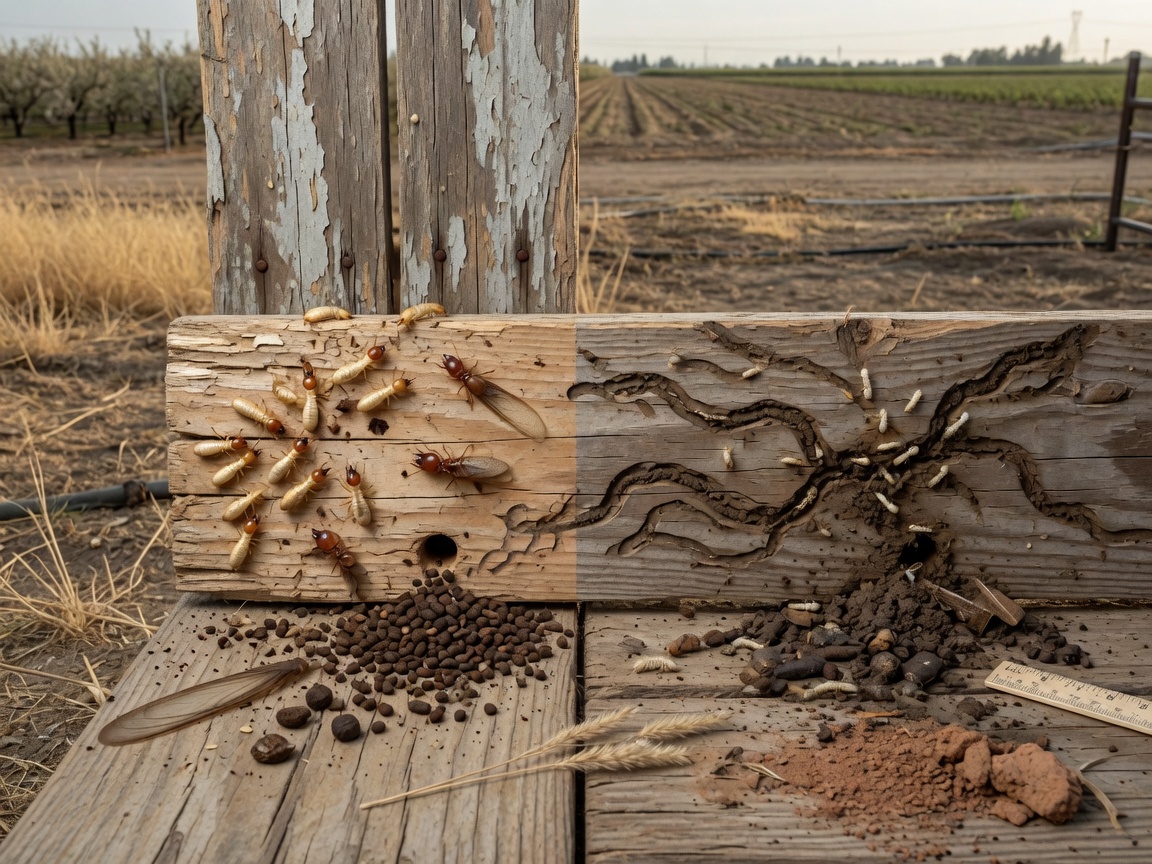
Drywood termites in Galt typically infest dry wood above ground without soil contact while subterranean termites require moisture from soil and build mud tubes to reach structures. These distinctions matter most in Sacramento County where cool wet winters supply the ground moisture subterranean colonies need and hot dry summers favor drywood activity in exposed lumber.
Habitat and Moisture Needs Near Galt
Subterranean termites thrive in the moist soil conditions created by Galt's cool wet winters around areas such as North Galt and Twin Cities. They maintain constant contact with the ground and travel through mud tubes to reach foundation wood in homes near Galt Community Park. Drywood termites instead colonize dry structural lumber without needing soil moisture, often entering through small cracks in older buildings around the Historic Galt Depot or Marian Park. The shift from winter rains to summer heat limits subterranean spread above ground but allows drywood colonies to persist in attic spaces and window frames.
Signs of Infestation in Local Homes
Look for frass that resembles sand or coffee grounds near baseboards in drywood cases, especially in homes built before widespread soil treatments in Downtown Galt. Subterranean activity shows as pencil-thick mud tubes along foundation walls or under siding after winter rains. Both types produce swarmers in spring, yet drywood alates are larger with straight antennae while subterranean ones shed wings near light sources. Checking crawl spaces and attic framing after cool wet periods reveals which species is active without needing to disturb the structure.
Damage Patterns and Wood Preference
Drywood termites create smooth galleries inside dry wood like rafters and door frames, leaving behind fecal pellets that homeowners often notice first in North Galt properties. Subterranean termites hollow wood along the grain and coat tunnels with soil, concentrating damage near ground level in homes close to Elk Grove or Lodi. The hot dry summers of Galt accelerate drying of surface wood, making it less appealing to subterranean colonies but suitable for drywood feeding over multiple seasons. Inspecting for these gallery shapes helps differentiate the two before damage reaches load-bearing members.
Treatment Considerations for Galt Properties
Targeted wood treatments address drywood colonies in localized spots such as window sills while soil-applied barriers interrupt subterranean foraging tubes around foundations. Termite Treatment options vary by species because drywood work stays above grade and subterranean control focuses on the soil interface. Follow-up inspections after the first winter rains confirm whether tubes reappear or new frass pellets form. Homeowners in Stockton-adjacent areas benefit from timing checks during the transition from wet to dry seasons when activity shifts.
Seasonal monitoring around Galt remains essential because the climate cycle of hot dry summers and cool wet winters directly influences which termite type gains advantage each year. What Homeowners Should Know About Termite Swarms In Spring provides additional timing details for local properties. Regular visual checks of foundations and attic spaces catch early activity before either species spreads further through older housing stock.