2026-09-03 · Chris Morales
How Irrigation Practices Influence Pest Pressure On Properties
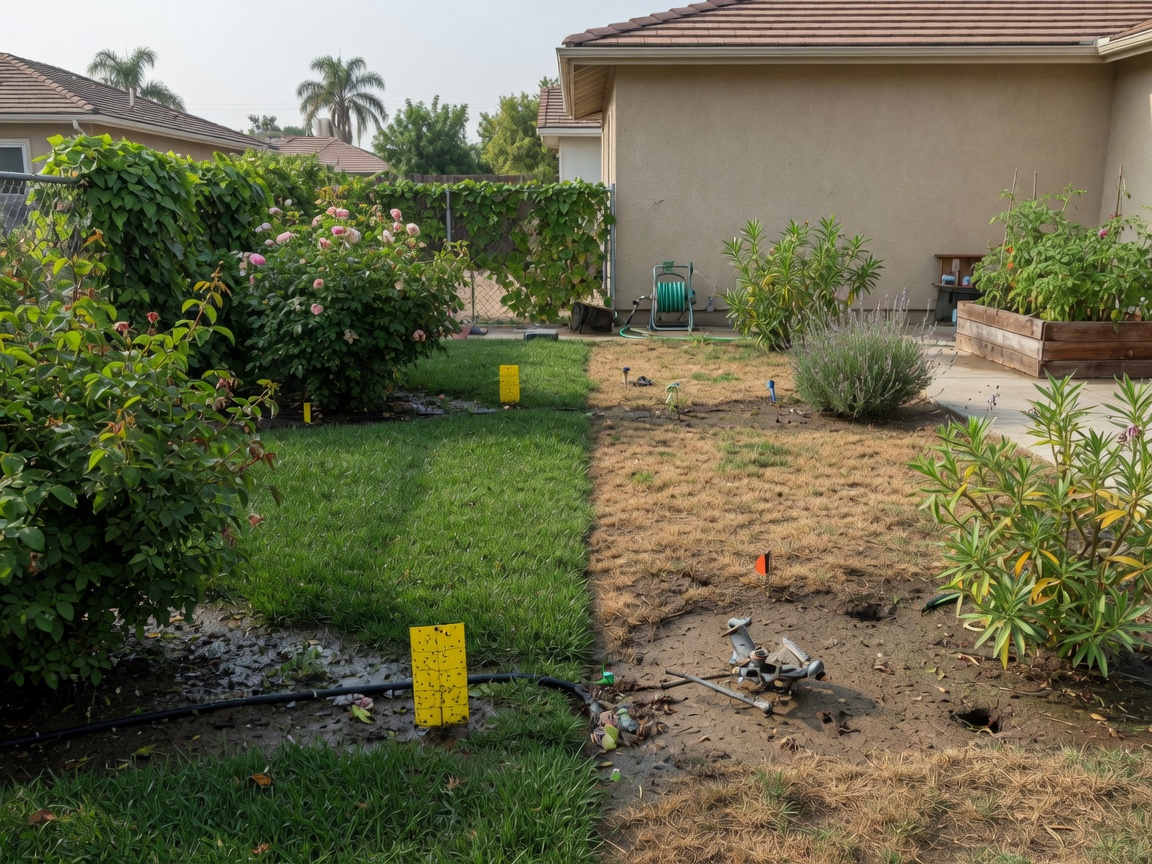
Excess moisture from irrigation systems raises pest pressure on Galt properties by extending the active season for mosquitoes and rodents, especially when sprinklers run during the hot dry summers that normally limit standing water. Properties near Galt Community Park or the Historic Galt Depot often see higher activity because older irrigation lines leak into clay soils common in North Galt and Twin Cities, keeping foundation perimeters damp long after the cool wet winters end.
Overwatering and Mosquito Development
Standing water as small as a quarter inch allows mosquito larvae to mature in five to seven days during Galt's summer heat. Homeowners who water turf daily near Marian Park or along the edges of agricultural fields bordering Elk Grove and Lodi create persistent puddles under shrubs and in low spots. These sites remain productive even when natural rainfall stops because the region's low humidity evaporates surface water slowly once it pools. Adjusting run times to two or three cycles per week and installing pressure-regulating heads cuts larval habitat without stressing plants. Properties that share irrigation schedules with nearby farms in Stockton see spillover runoff that sustains breeding through October.
Rodent Pathways Created by Constant Moisture
Rodents follow moist soil lines when searching for food and shelter, and irrigation leaks along foundations in Downtown Galt provide both cover and easy digging. Gophers and roof rats exploit the soft ground around older homes in North Galt where clay holds water longer than sandy soils farther east toward Lodi. Once tunnels stay damp, rodents expand them toward kitchens and garages rather than retreating during the dry season. Checking valve boxes and drip lines monthly reveals hidden leaks before colonies establish. Rodent Control crews often trace activity directly to irrigation timers set for pre-dawn hours when evaporation is lowest.
Soil Conditions and Burrowing Pests in Galt
Heavy clay soils throughout Sacramento County retain irrigation water near the surface, softening the ground for ants and rodents to tunnel under slabs and porches. In Twin Cities neighborhoods, summer watering that exceeds one inch per week keeps these layers saturated, allowing pests to remain active instead of seeking deeper, drier refuges. Homeowners who switch to cycle-and-soak methods or replace fixed spray heads with rotary nozzles reduce the saturated zone by half. This change also limits the humidity that draws spiders and silverfish into crawl spaces during the cool wet winters when outdoor conditions turn unfavorable.
Practical Irrigation Changes That Lower Pressure
Set controllers to weather-based schedules that skip days after measurable rain, a common occurrence in Galt from November through March. Replace broken heads and raise spray patterns so water lands on turf rather than concrete walkways that channel moisture toward foundations. In older homes near the Historic Galt Depot, converting to drip irrigation along planting beds eliminates the broad wet zones that support both mosquitoes and rodents. These adjustments keep pest activity low while matching the hot dry summers that define the local growing season.
Monitoring irrigation output with a tuna-can test once each season shows whether systems deliver more water than landscapes need. Properties that adopt these steps report fewer service calls for Mosquito Management and fewer signs of rodents around foundations. How To Identify Rodent Entry Points Around Foundations explains how to inspect the same damp areas that irrigation creates.