2026-09-03 · Chris Morales
Signs Of Gopher Activity In Local Lawns And Gardens
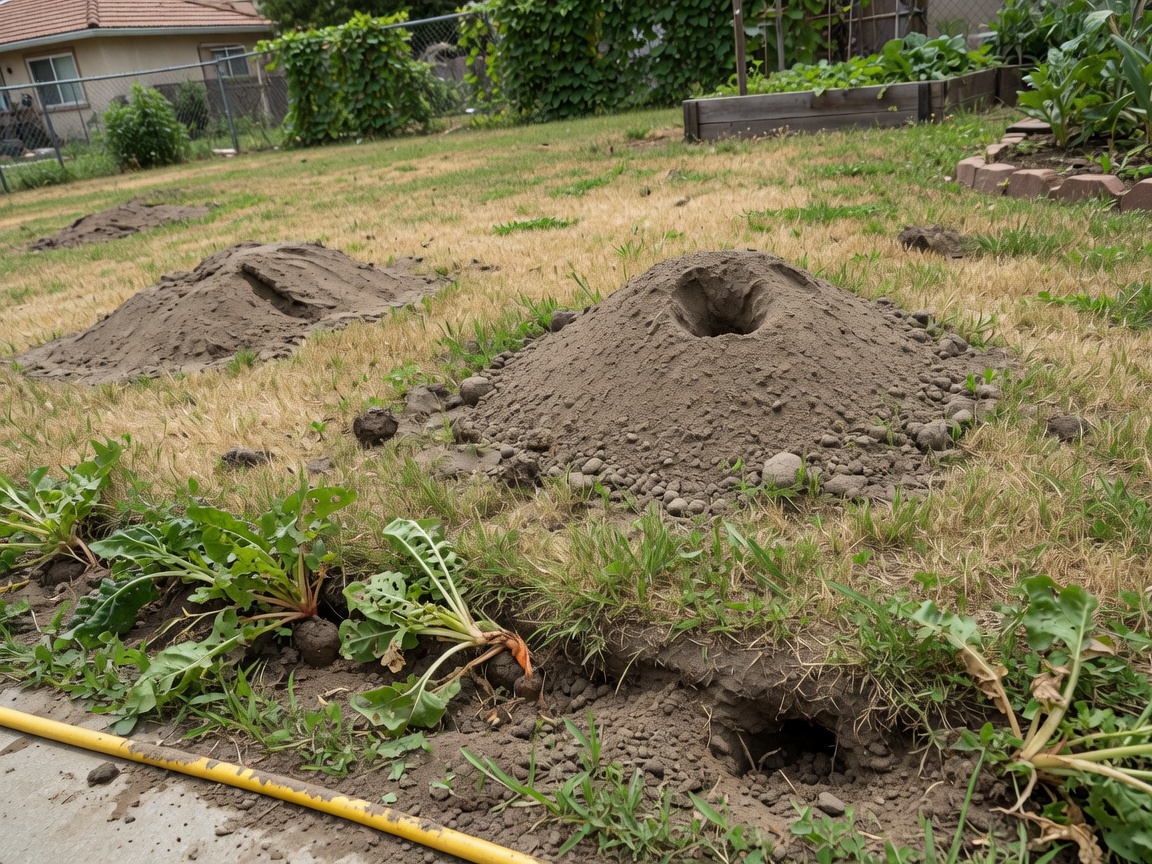
The clearest signs of gopher activity in Galt lawns and gardens are fresh crescent-shaped mounds of soil, patches of wilting plants with roots chewed away, and raised ridges from shallow tunnels. These indicators show up most often in the weeks after cool wet winters loosen the soil across neighborhoods like North Galt and Twin Cities.
Fresh Mounds and Soil Disturbance
Gophers push soil to the surface through side tunnels, creating mounds that measure 12 to 18 inches across and sit slightly to one side of the main tunnel. In Galt the cool wet winters from November through March soften clay-heavy soils near Marian Park and the Historic Galt Depot, making it easier for the animals to excavate and produce these mounds within a day or two. Hot dry summers that follow drive gophers deeper, so new mounds become less frequent but existing tunnels remain active. Homeowners in Downtown Galt often notice the first mounds along fence lines or garden edges where irrigation keeps the ground workable year-round. Checking for plugged holes and the absence of grass on the mound itself confirms recent gopher work rather than mole activity.
Root and Plant Damage Patterns
Gophers feed on roots and tubers from below, causing plants to yellow or collapse without obvious above-ground chewing. In Galt gardens this shows up first on vegetable rows and young trees where roots are shallow. The animals can strip an entire row of tomatoes or roses in a single night when soil moisture is high after winter rains. Lawns in North Galt display irregular dead patches 1 to 3 feet wide where tunnel networks cut off water and nutrients. Unlike surface-feeding pests, gopher damage leaves the top growth intact until the plant topples from lack of root support. Gardeners who pull gently on affected plants often find the roots cleanly severed and soil pushed into the hole.
Seasonal Activity Tied to Local Weather
Gopher tunneling increases sharply once winter rains begin in Sacramento County, with peak mound production occurring between December and February when soil remains moist for weeks. By April the shift to hot dry summers reduces surface activity as gophers retreat to deeper burrows to conserve moisture. Established yards around Galt Community Park see repeated damage each spring because older irrigation systems keep pockets of soil soft enough for continued work. Homeowners who monitor mounds weekly during the wet season can map the main tunnel runs before summer heat hardens the ground and hides the evidence.
Telling Gophers Apart from Other Local Rodents
Moles create volcano-shaped mounds with no visible plug and focus on insects rather than roots. Pocket gophers leave the crescent shape and target vegetation. In Galt the distinction matters because rodent control methods differ once the correct animal is identified. Raised ridges that crack the lawn surface point to gophers, while random holes without mounds usually indicate ground squirrels common near the Historic Galt Depot. Checking for tooth marks on roots or the presence of soil plugs inside the mound provides the final confirmation before any treatment begins.
When these signs appear consistently, mapping the tunnel system and monitoring new mounds for several days helps determine the extent of the colony. Property owners who want targeted removal can review options on our gopher control page. Additional guidance on spotting rodent work around structures appears in the article How To Identify Rodent Entry Points Around Foundations.