2026-09-03 · Chris Morales
What To Expect During A Typical Home Pest Inspection
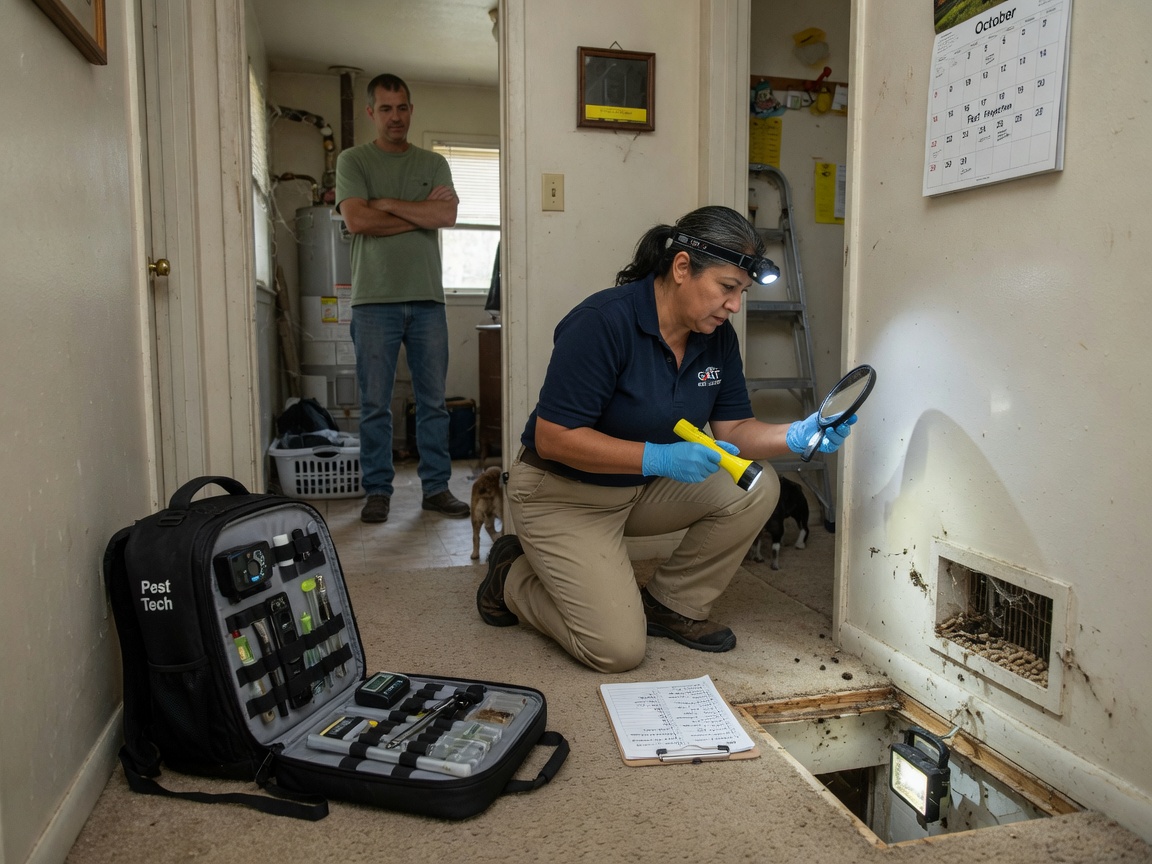
A home pest inspection in Galt usually begins with a systematic exterior walk, followed by targeted interior checks that last long enough to examine foundations, attics, and crawl spaces without rushing. Inspectors note signs of activity influenced by the area's older housing stock near the Historic Galt Depot and newer builds in North Galt, where cool wet winters drive rodents and ants indoors while hot dry summers push insects toward moisture sources.
Exterior Foundation and Perimeter Check
Inspectors start at ground level, scanning for gaps around concrete slabs and siding that appear frequently in Twin Cities neighborhoods. They examine soil moisture near irrigation lines because wet winters saturate ground around older homes in Downtown Galt, creating pathways for rodents. Landmarks like Galt Community Park and Marian Park often border residential blocks where leaf litter and standing water after rains attract additional pests. The process includes lifting access panels on exterior outlets and checking weep holes in brick veneer. Nearby cities such as Elk Grove and Lodi share similar terrain, so patterns observed here translate directly. This phase identifies how seasonal shifts affect structures built decades ago versus recent construction along Stockton corridors.
Attic, Crawl Space, and Interior Void Inspection
Once outside work finishes, the focus shifts indoors to attics and crawl spaces common in Galt homes. Inspectors use flashlights to trace droppings or nesting material along rafters, noting how dry summer heat forces pests to seek shelter in insulated voids. In properties near the Historic Galt Depot, older wiring and plumbing penetrations often serve as entry routes. The inspection covers baseboards and cabinet voids where cockroaches or spiders hide during wet winters. Technicians check under sinks and behind appliances without moving furniture, documenting conditions that influence activity levels. This interior pass reveals how Sacramento County humidity cycles change pest behavior inside walls compared to the drier summers.
Common Local Pest Indicators and Documentation
During the visit, specific signs tied to Galt conditions receive attention, such as mud tubes on foundations after winter rains or ant trails near irrigated lawns. Rodent control considerations arise when chew marks appear on weather stripping in North Galt homes. Inspectors also note mosquito breeding spots created by seasonal standing water, linking findings to How To Handle Mosquito Breeding Sites After Winter Rain. Documentation includes photos of entry points and written notes on moisture levels that drive activity. The same patterns appear in nearby Lodi and Stockton properties, allowing direct comparisons. This record helps homeowners understand which issues stem from local climate rather than isolated incidents.
Recommendations and Scheduling Next Steps
At the conclusion, the inspector reviews findings on site and outlines targeted treatments based on observed evidence rather than blanket approaches. For rodent issues, readers can reference How To Identify Rodent Entry Points Around Foundations for additional detail. Ant or spider concerns may point toward ant control or spider control pages. Availability for follow-up work runs Mon–Fri 7am–5pm. The process closes with clear next actions tailored to the home's age and location within Galt, ensuring residents in Twin Cities or Downtown areas receive guidance matched to actual conditions rather than generic advice.