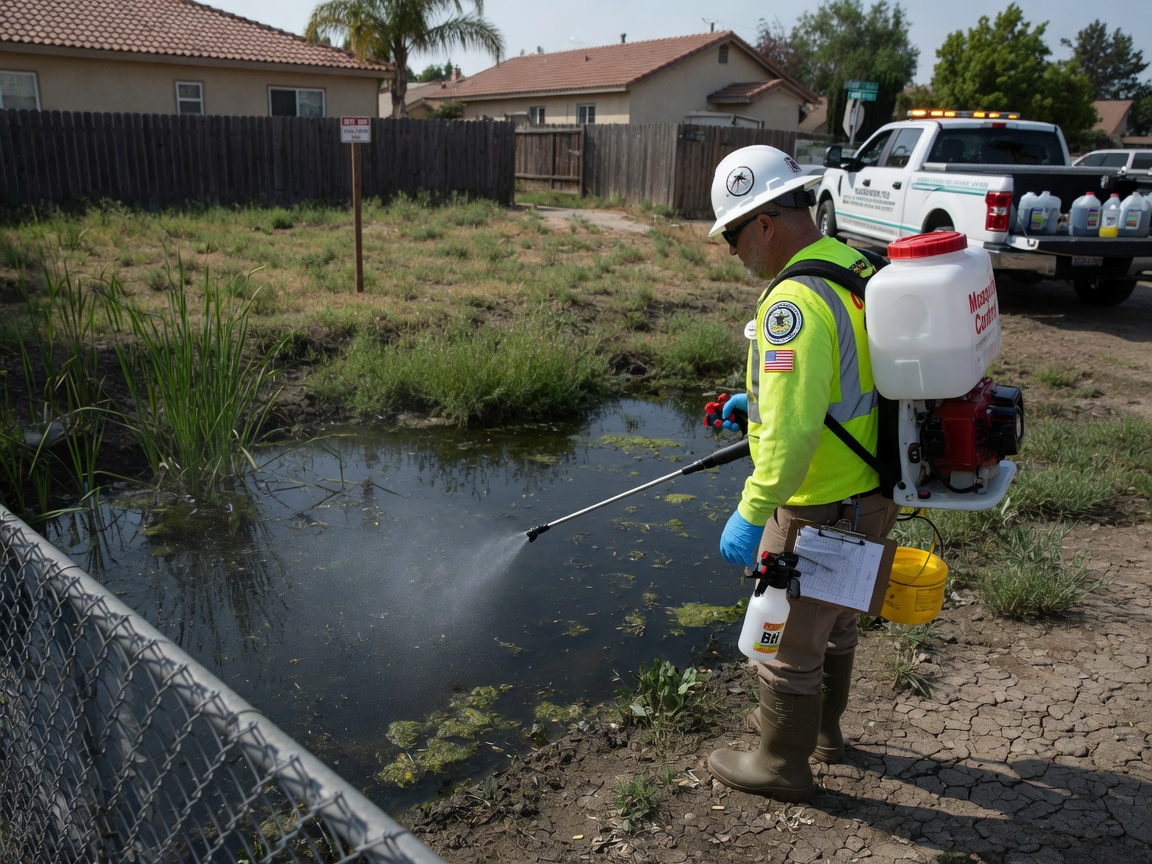
Mosquito management in Long Beach focuses on standing water created by port operations and waterfront drainage along the I-710 and CA-1 corridors where shipping and maritime traffic sustain larvae populations. The mild Mediterranean climate moderated by the ocean prevents the winter die-off seen inland, requiring technicians to inspect marinas near the Queen Mary and Aquarium of the Pacific for persistent breeding in tidal-influenced systems. Dense housing stock ranging from older waterfront homes to multi-unit apartments near I-405 often hides sources in shared gutters and irrigation lines that standard treatments miss without targeted follow-up.
Mosquito Management in Long Beach — What We Handle
- ✓Port of Long Beach access rules demand advance coordination unlike suburban jobs.
- ✓Ocean influence creates continuous breeding cycles absent in hotter inland valleys.
- ✓High-density neighborhoods along I-405 increase shared drainage complaints requiring multi-unit inspections.
Mosquito pressure in Galt spikes after cool, wet winters when water collects in low spots around older homes near the Historic Galt Depot and in North Galt yards. Technicians focus on larval source reduction first, treating gutters, birdbaths, and irrigation low points before adults emerge. Sacramento County rules limit certain broadcast products near Marian Park and community ponds, so crews use targeted larvicides that break the cycle without broad spraying.
Hot, dry summers push mosquitoes toward any remaining moisture from sprinklers or shaded corners in Twin Cities and Downtown Galt neighborhoods. Barrier applications on vegetation and structure perimeters last through peak activity periods when residents spend evenings outside. Edge cases include properties backing onto drainage ditches that feed into Elk Grove or Lodi agricultural zones, where wind and shared water lines can reintroduce adults quickly.
How It Works in Long Beach
- 1
Site Inspection
Walk the property to map breeding locations, noting irrigation patterns and shaded areas typical in Galt neighborhoods.
- 2
Source Treatment
Apply larvicides to standing water and recommend homeowner fixes for drainage around homes near Historic Galt Depot.
- 3
Barrier Application
Treat perimeter vegetation and structures to limit adult activity during dry summer conditions.
- 4
Follow-Up Check
Return after initial service to verify results and address any new water sources created by seasonal changes.
Mosquito Management Services We Offer in Long Beach
✓Larval Source Reduction
Locates and treats standing water sites around Galt homes before mosquitoes hatch, focusing on gutters, planters, and low yard spots common after winter rains.
✓Barrier Spray Application
Applies residual treatments to vegetation and structure edges to reduce adult mosquito entry into yards in North Galt and Downtown areas during summer months.
✓Seasonal Mosquito Prevention Plans
Sets recurring visits timed to Galt's wet-winter and hot-summer patterns, covering properties near Galt Community Park and Marian Park where breeding persists.
✓Yard Drainage Assessment
Evaluates irrigation and grading issues that create breeding sites on older Galt lots, recommending fixes before chemical treatments.
✓Commercial Property Mosquito Control
Treats larger sites such as businesses and shared spaces in the Twin Cities area with focused larvicide and perimeter work.
Serving All of Long Beach
We regularly handle mosquito management jobs near:
- 📍Queen Mary
- 📍Aquarium of the Pacific
- 📍Long Beach City Hall
- 📍Port of Long Beach
Mosquito Management Pricing in Long Beach
Pricing depends on property size, number of breeding sites, and whether drainage fixes are needed before treatment.
Want the full picture of this service? See our Mosquito Management page, or everything we do in Long Beach, CA.