
2026-10-28 · Sam Torres
How To Handle Mosquito Breeding Sites After Winter Rain
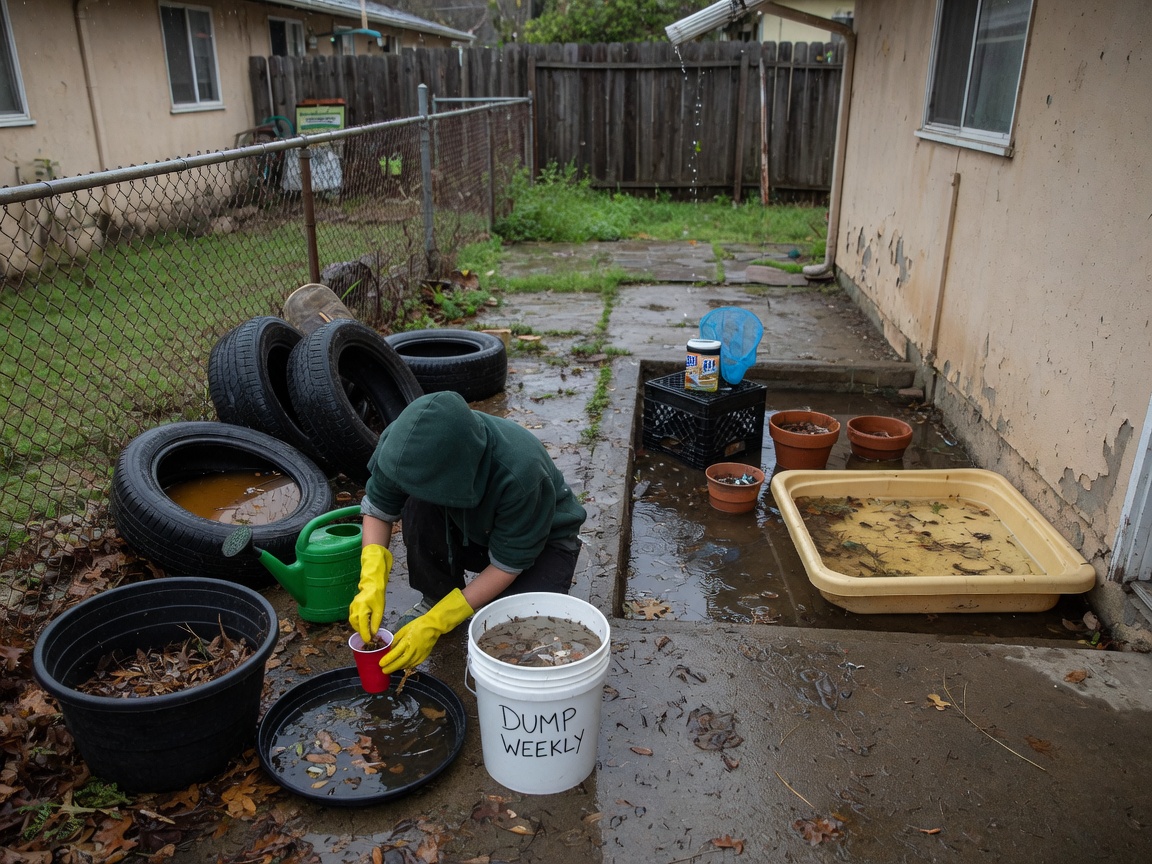
After winter rains in Galt, inspect properties within 48 hours for standing water that mosquitoes use to breed, then remove or treat those sites before eggs hatch in seven to ten days. Cool wet winters leave behind pools in yards, gutters and low spots that persist into spring, especially in older housing stock found in Downtown Galt and North Galt. The shift to hot dry summers that follows forces mosquitoes to seek any remaining moisture near homes, making early action essential for residents near Galt Community Park or the Historic Galt Depot.
Finding Standing Water Around Galt Properties
Galt's mix of older homes in Downtown Galt and newer builds in North Galt and Twin Cities creates varied opportunities for water to collect after cool wet winters. Check clogged gutters on single-story houses common in the area, birdbaths, and low areas near foundations where soil stays damp longer than in surrounding Sacramento County fields. Marian Park and nearby yards often hold water in tire ruts or plastic toys left outside. Walk the perimeter twice after each storm, focusing on shaded spots that dry slowly. Empty containers weekly because mosquito larvae develop in as little as five days when temperatures rise. Note any irrigation leaks common in Galt's clay-heavy soils that keep small depressions wet through spring.
Removing Breeding Sites Before Summer Heat
Begin by dumping water from buckets, flowerpot saucers and wheelbarrows stored outside, then store them upside down so rain cannot refill them. Clean gutters along homes in North Galt where tree debris from local oaks accumulates during wet winters. Drill drainage holes in outdoor furniture or tarps that collect pools. For larger areas like low spots near the Historic Galt Depot, add gravel or soil to improve drainage and prevent future pooling. In Twin Cities neighborhoods, trim vegetation around ponds or ditches to increase airflow and speed evaporation. These steps reduce available sites before the dry season concentrates mosquitoes around remaining water sources.
Treating Persistent Water Sources
When complete removal is not possible, apply mosquito dunks containing BTI to birdbaths, rain barrels and drainage ditches around Galt properties. These products work for up to 30 days in standing water and target larvae without harming pets or birds when used as directed. Reapply after heavy spring rains that refill treated areas. For properties near Galt Community Park, coordinate with neighbors to treat shared drainage swales that cross lot lines. Avoid using oils or chemicals that can harm local soil and water conditions in Sacramento County. Re-check treated sites every two weeks through May as temperatures climb toward summer.
Knowing When Professional Help Is Needed
Homeowners who find repeated breeding in hard-to-reach spots such as crawl spaces or large drainage systems should contact Alpha Omega Pest Management during business hours. Technicians familiar with Galt's terrain can identify hidden sources that persist after basic removal efforts. Persistent issues often trace to underground leaks or poor grading around older homes in Downtown Galt. Early professional assessment prevents larger populations from establishing before hot dry summers begin. For related guidance on local wildlife pressures, see Signs Of Gopher Activity In Local Lawns And Gardens.