2026-09-03 · Chris Morales
Managing Yellowjacket Nests During Late Summer Harvest Season
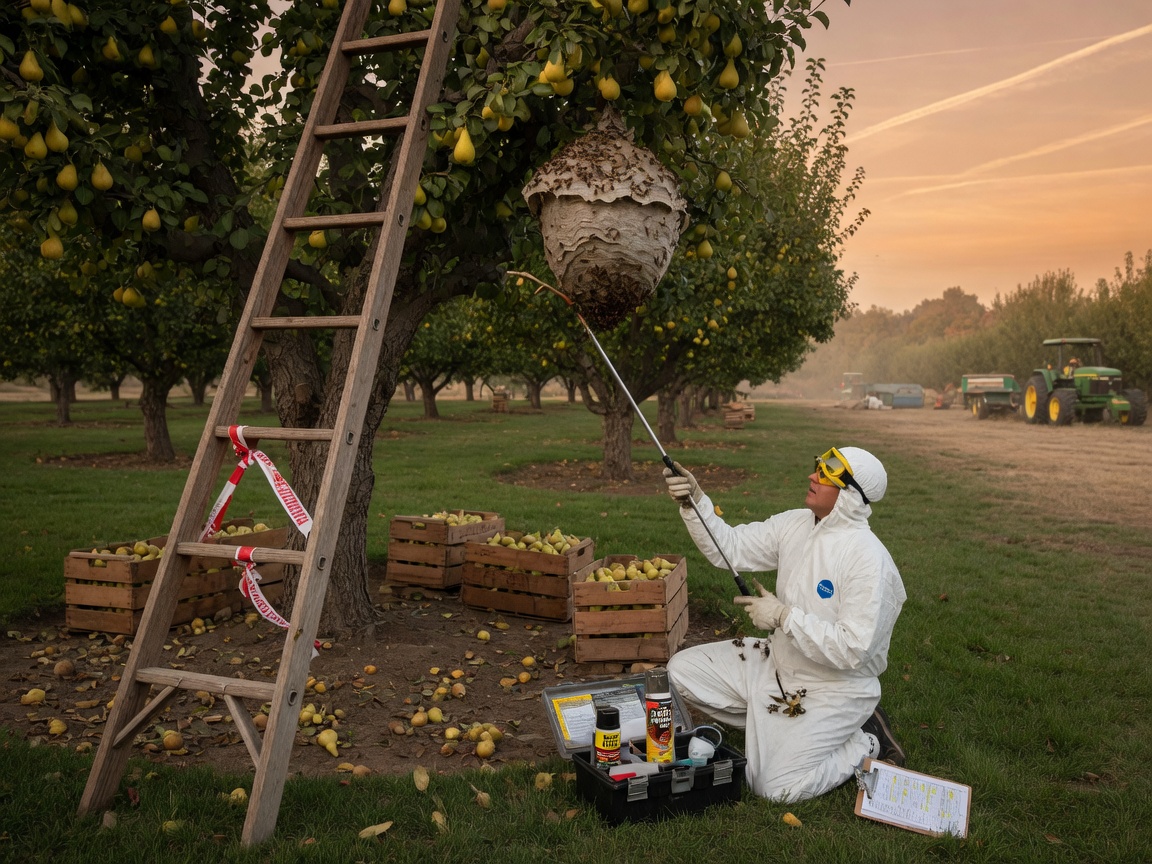
Yellowjacket nests in Galt require active management from mid-August through early October when hot dry summers drive foraging around ripening fruit and water sources in neighborhoods like Twin Cities and near Galt Community Park. Homeowners see increased pressure on older wood-frame homes in Downtown Galt where wall voids and eaves provide protected cavities. Early detection prevents colony expansion that can reach several thousand workers before the first cool wet winter rains force queens into hibernation.
Yellowjacket Activity Patterns Tied to Galt Climate
Hot dry summers in Sacramento County push yellowjackets to seek moisture and sugar from late-summer harvests in backyards near the Historic Galt Depot and Marian Park. Workers travel farther from underground or aerial nests once local temperatures stay above 90 degrees for weeks. Cool wet winters that follow limit new colony starts but leave existing nests active until the first hard frost. Properties with irrigation near outbuildings see higher traffic because standing water supplements natural sources. Monitoring should begin once grapes and figs ripen in North Galt yards.
Locating Nests on Local Properties
Check eaves, crawl spaces, and rodent burrows around older homes in Downtown Galt where siding gaps allow entry. Aerial nests often hang in dense shrubs or under decks near Twin Cities streets. Underground nests appear as small soil openings with steady traffic in sunny afternoons. Walk the perimeter at dusk when workers return; count the number of insects entering a single point. Nests near fruit trees or compost piles in North Galt demand weekly checks through September.
Step-by-Step Nest Management
Wear protective clothing and work at dusk or dawn when most workers are inside. Never seal an active entrance during daylight. For small exposed nests, apply a labeled aerosol directly into the opening after dark. Larger colonies in wall voids or underground require dust formulations that workers carry deeper into the nest. Always treat from a safe distance and avoid shining lights directly on the nest. If activity continues after seven days, a second application is usually needed.
Prevention During Harvest Season
Remove fallen fruit daily from trees near Galt Community Park homes and cover compost with tight lids. Seal gaps around utility lines and soffits on pre-1970s houses common in Downtown Galt. Reduce standing water from irrigation practices that draw foragers. How irrigation practices influence pest pressure on properties explains how overwatering creates additional attractants. Store pet food indoors and keep trash bins closed. These steps lower pressure on properties near Lodi and Elk Grove borders where agriculture adds extra food sources.
When Professional Help Is Required
Nests inside occupied structures or larger than a basketball need equipment and experience to avoid stings or structural damage. Alpha Omega Integrated Pest Management operates Monday through Friday from 7am to 5pm and handles yellowjacket work throughout Sacramento County including Stockton routes. Wasp removal crews use targeted dusts and foams that reach deep cavities without widespread chemical use. Reducing wildlife access around outbuildings and barns offers additional steps for rural parcels near Twin Cities that share similar nest pressures.